
The Thomistic Institute Podcast
The Thomistic Institute exists to promote Catholic truth in our contemporary world by strengthening the intellectual formation of Christians at universities, in the Church, and in the wider public square. The thought of St. Thomas Aquinas, the Universal Doctor of the Church, is our touchstone.
The Thomistic Institute Podcast features the lectures and talks from our conferences, campus chapters events, intellectual retreats, livestream events, and much more.
Founded in 2009, the Thomistic Institute is part of the Pontifical Faculty of the Immaculate Conception at the Dominican House of Studies in Washington, DC.
The Thomistic Institute Podcast features the lectures and talks from our conferences, campus chapters events, intellectual retreats, livestream events, and much more.
Founded in 2009, the Thomistic Institute is part of the Pontifical Faculty of the Immaculate Conception at the Dominican House of Studies in Washington, DC.

 Spotify
 Apple Podcasts
 Youtube Music
 iHeartRadio
 RSS Feed
The Thomistic Institute exists to promote Catholic truth in our contemporary world by strengthening the intellectual formation of Christians at universities, in the Church, and in the wider public square. The thought of St. Thomas Aquinas, the Universal Doctor of the Church, is our touchstone.
Recent Episodes

Oct. 26, 2026
What is Truth? - Dr. Scott Roniger
Dr. Scott Roniger explores the nature of truth by synthesizing Aristotelian-Thomistic metaphysics with phenomenology to demonstrate how the human intellect achieves a profound union with reality, allowing us to grasp the essence of being. This lecture was given on February 25th, 2026, at University of California, Los Angeles. For more information on upcoming events, visit us at thomisticinstitute.org/upcoming-events About the Speaker: Dr. Scott J. Roniger is Associate Professor of Philosophy

Oct. 23, 2026
How to Be a Good Friend: Combatting Envy and Fostering Love - Prof. Scott Cleveland
Prof. Scott Cleveland explores the Aristotelian and Thomistic vision of friendship, arguing that true flourishing requires overcoming the vices of envy and apathy through the practice of charity and virtuous love. This lecture was given on February 24th, 2026, at North Carolina State University. For more information on upcoming events, visit us at thomisticinstitute.org/upcoming-events About the Speaker: Professor Scott Cleveland received his PhD in philosophy (Baylor University) and is Asso

Oct. 22, 2026
Why Do We Need Justification?: On Original Sin - Prof. Erik Dempsey
Prof. Erik Dempsey explores Original Sin as a fundamental, lived reality inherently inclining the human person toward wrongdoing, but recognizing our brokenness is essential for understanding our constant need for divine grace and justification. This lecture was given on March 20th, 2026, at Dominican House of Studies. For more information on upcoming events, visit us at thomisticinstitute.org/upcoming-events About the Speaker: Professor Erik Dempsey an Associate Professor of Instruction in
Oct. 21, 2026
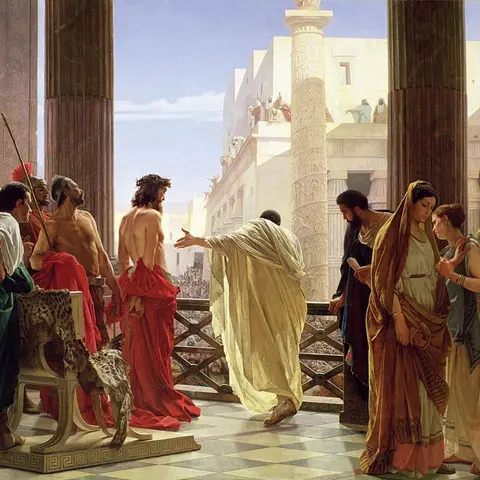
Identifying the Question? - Prof. Adam Eitel
Prof. Adam Eitel argues that modern identity theories ultimately fail because they lack a stable metaphysical grounding, and he proposes an alternative view rooted in Saint Thomas Aquinas’s exposition of Psalm 8. This lecture was given on February 27th, 2026, at St. Raphael Retreat Center. For more information on upcoming events, visit us at thomisticinstitute.org/upcoming-events About the Speaker: Professor Eitel is an Associate Professor of Theology at the University of Dallas. Before join
Oct. 20, 2026
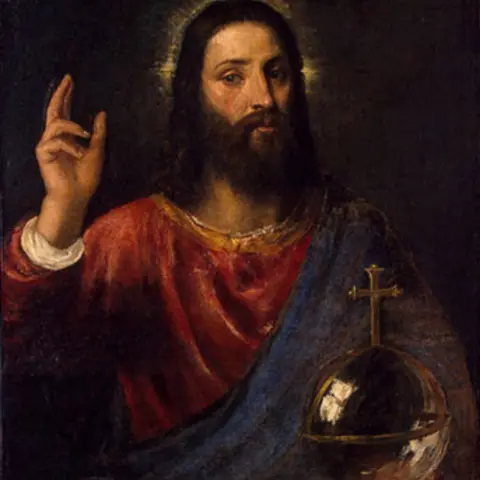
The Natural Principles of Identity in Christ - Fr. Irenaeus Dunlevy, O.P.
Fr. Irenaeus Dunlevy examines the contemporary crisis of identity by contrasting modern fluid subjectivism with the Thomistic realist perspective of the human person, arguing our true identity is rooted in our nature as beings created by God and ordered toward Him This lecture was given on February 28th, 2026, at St. Raphael Retreat Center. For more information on upcoming events, visit us at thomisticinstitute.org/upcoming-events About the Speaker: Fr. Irenaeus Dunlevy, O.P. is a Coordinato

Oct. 19, 2026
Identity in Christ - Prof. Adam Eitel
Prof. Adam Eitel contrasts the modern, self-constituted notions of identity with the Thomistic understanding of man as a creature capable of seeing God., whereby our human identity is fundamentally reordered from the Adamic image to the image of Christ This lecture was given on February 28th, 2026, at St. Raphael Retreat Center. For more information on upcoming events, visit us at thomisticinstitute.org/upcoming-events About the Speaker: Professor Eitel is an Associate Professor of Theology
Listen On


