
 Spotify
 Apple Podcasts
 Youtube Music
 iHeartRadio
 RSS Feed
 How Can I be a Holy Scientist? - Dr. Karin Öberg & Dr. Paul LaPenna
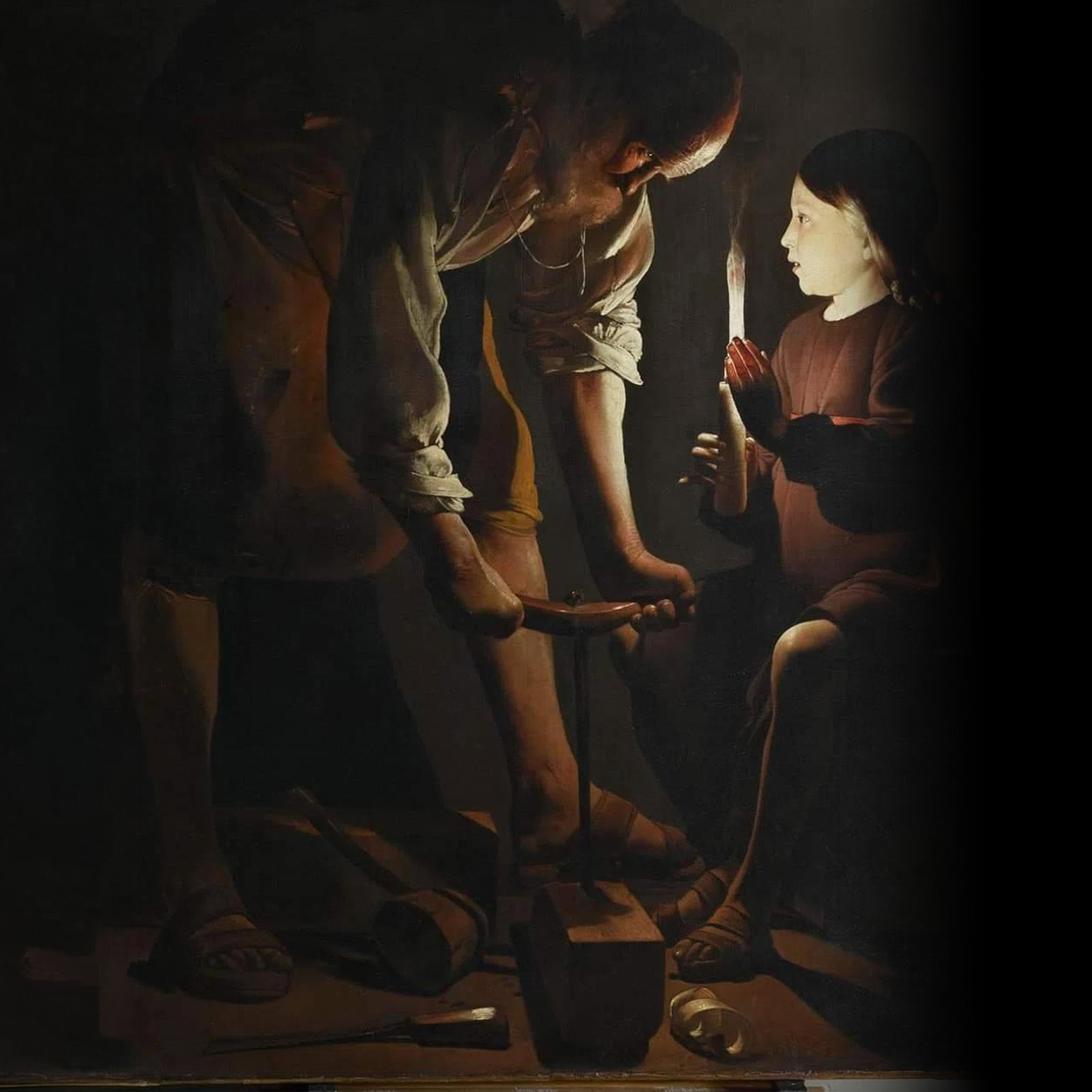
Dr. Karin Öberg and Dr. Paul LaPenna take up a deceptively simple question—how can a scientist be holy?—and show how the pursuit of truth in creation can become a path to humility, charity, and wonder before God.
This lecture was given on June 27th, 2026, at Dominican House of Studies.
For more information on upcoming events, visit us at thomisticinstitute.org/upcoming-events
About the Speaker:
Professor Öberg obtained her B.Sc. in Chemistry from Caltech and her Ph.D. in Astronomy from the University of Leiden. She has taught at Harvard since 2013, where she is the Thomas Dudley Cabot Professor of the Natural Sciences. Her scholarship aims to uncover how chemical processes impact the outcome of planet formation, with special attention to the possible habitability of nascent planets. She has published over 250 refereed articles, including in Nature and Science. Professor Öberg has been awarded the Barry Prize by the American Academy of Sciences and Letters (2024), the Harnack Lectureship by the Max Planck Society (2022), a Simons Investigator Award (2019), the American Astronomical Society's Newton Lacy Pierce Prize (2016), a Packard Fellowship (2014), and a Alfred P. Sloan Fellowship (2014). She is the Vice President of the Angelicum Board, a Board Member of the Society of Catholic Scientists, a member of the American Academy of Catholic Scholars and Artists, and a frequent public speaker on questions of science and faith.
Dr. Paul LaPenna is a neurologist based in Greenville, South Carolina, specializing in the care of patients with neurological emergencies. He is also an award-winning professor at the Edward Via College of Osteopathic Medicine, where he teaches neuroscience and has been recognized as the Professor of the Neuroscience Block from 2019 to 2025.
Dr. LaPenna’s professional and academic work is deeply informed by the thought of St. Thomas Aquinas, particularly regarding the integration of faith and reason, science and religion, and the Thomistic understanding of the human person. Through his lectures and writings, he explores how modern neuroscience complements classical philosophy and theology, offering insights into human cognition, virtue formation, and the relationship between mind, brain, and soul.
Dr. LaPenna lives in Greenville with his wife Nicole and their three daughters, Catherine, Susanna, and Lucia, who daily remind him of life’s greatest joys and deepest blessings.
Keywords: AI, Charity, Creation, Holy Scientist, Humility, Intellectual Virtue, Scientific Method, Studiousness, Theology Of Science, Wonder


